

The complete guide
Choosing a Doctor Scrubs Costume for Ages 9-10
A school note comes home asking for a career day outfit. Or your child wants to play doctor, but the dress-up box has nothing that quite fits the story. A matching set can make that choice simpler, especially when it includes both the clothes and the props.
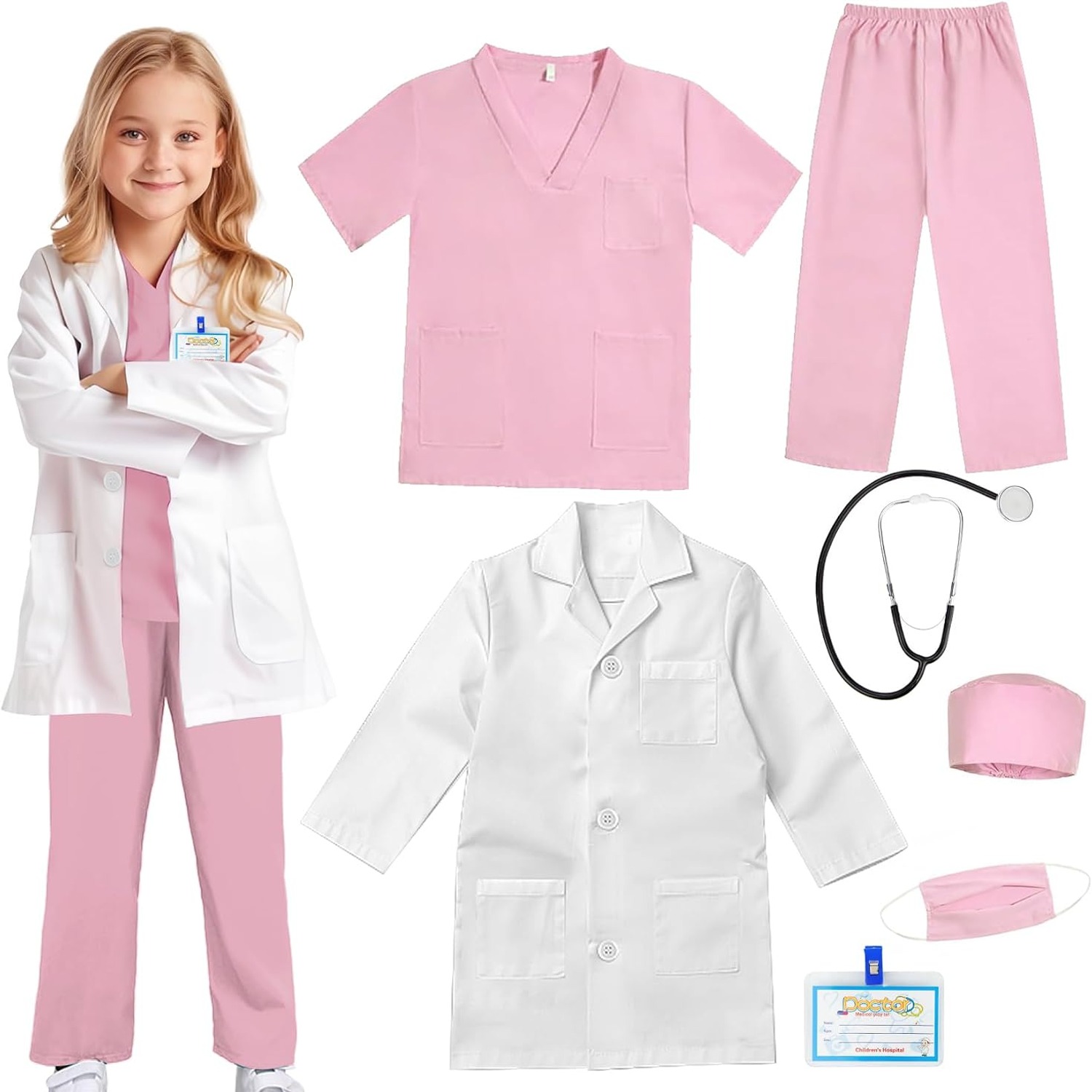
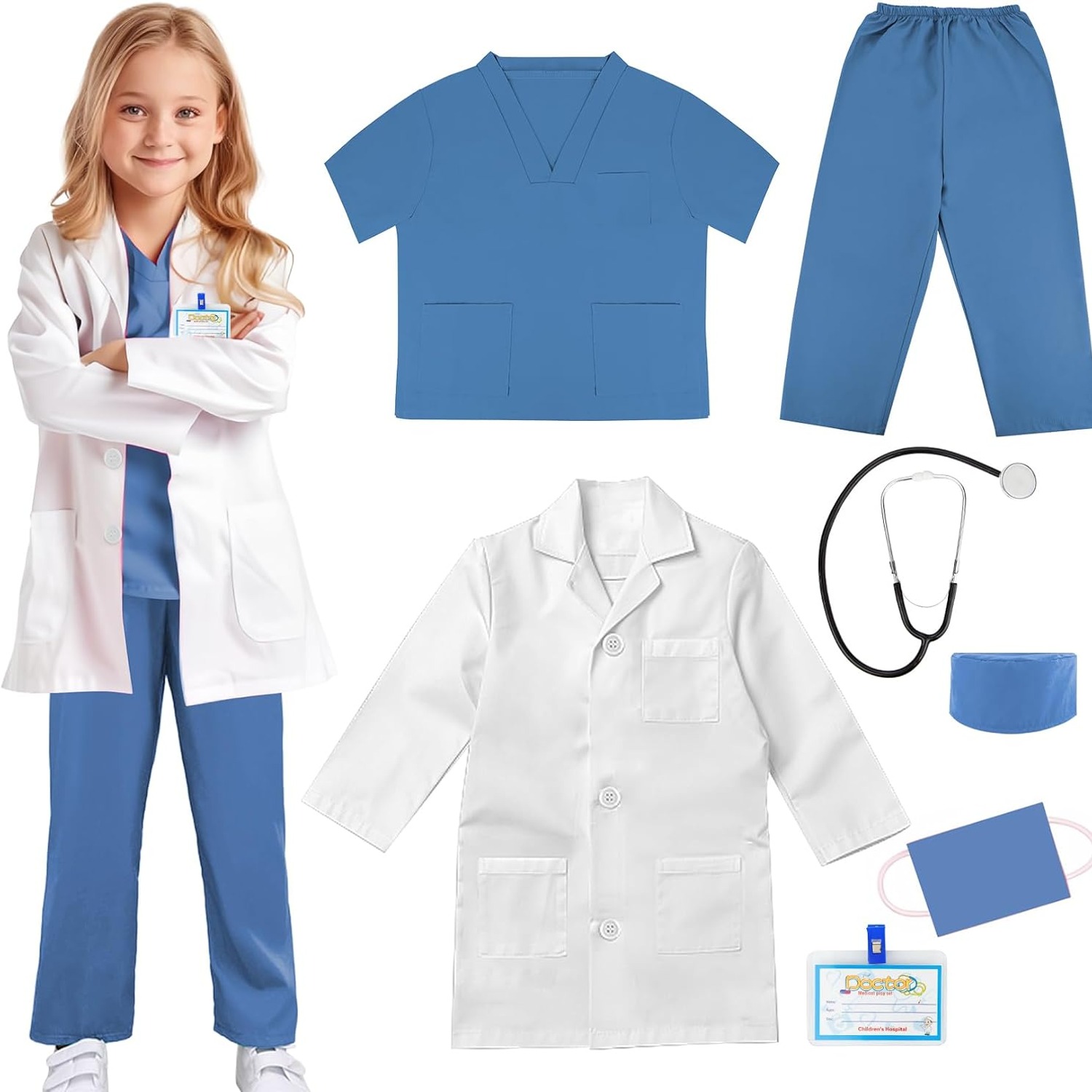
This kids doctor costume brings together seven pieces for the role. The age 9-10 option includes a lab coat, scrubs and a few pretend doctor accessories. Before choosing it, the most useful things to check are the garment measurements, what is actually included and whether it suits the event you have in mind.
What is in the seven-piece set?
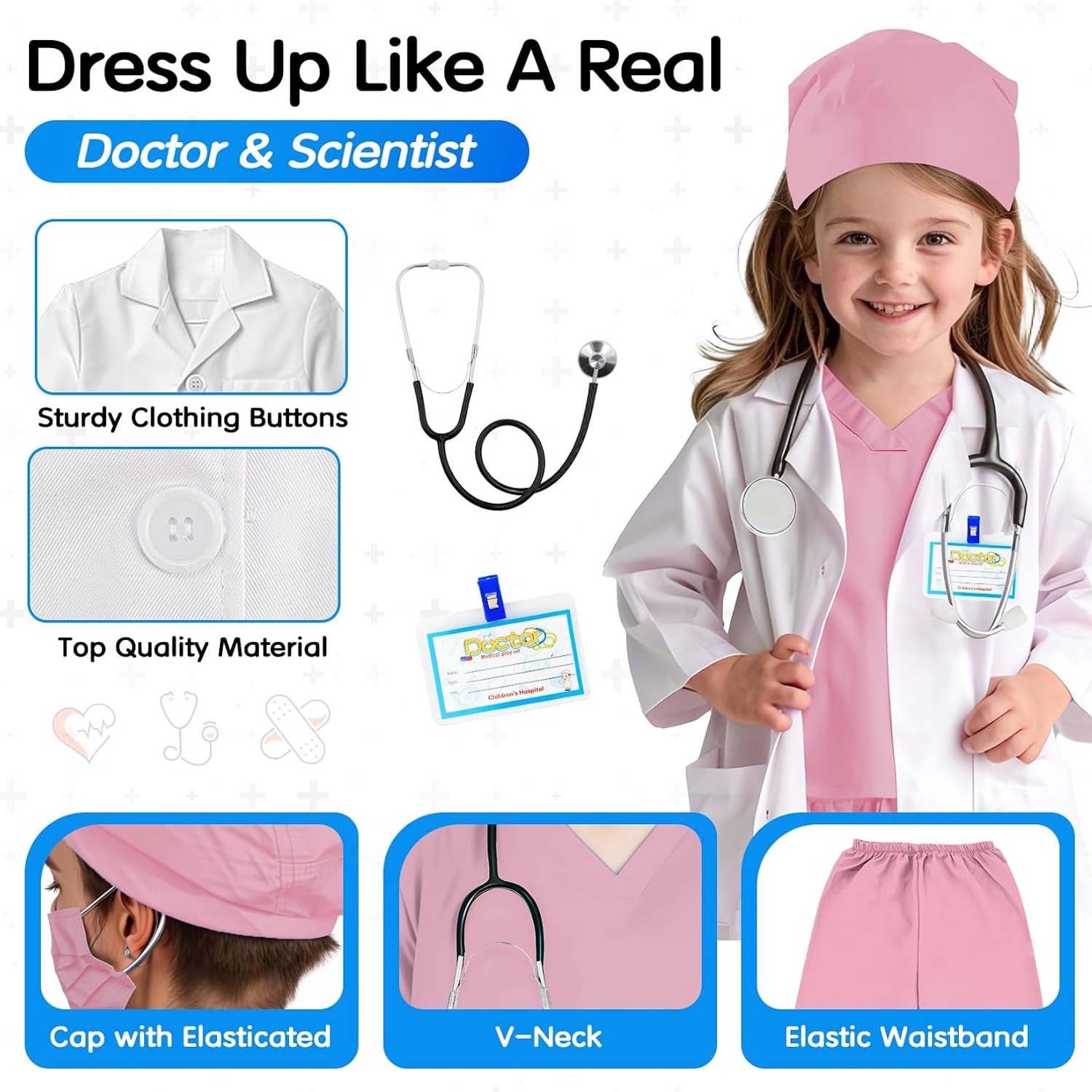
The outfit includes a lab coat, a scrub shirt and trousers. A cap and mask complete the clothing pieces, while a stethoscope prop and name badge add to the pretend doctor role. That makes seven pieces in total.
The scrub shirt has a V-neck and short sleeves. The coat gives the child a separate layer to wear over the scrubs. For a child who likes setting up a pretend clinic, these pieces provide a clear starting point without needing to gather several separate costume items.
Keep the pack list in mind when planning a party or performance. Shoes, a medical bag and extra toy instruments are not listed as included. If an activity needs those items, they will need to be arranged separately. There is no need to add them just to make a simple pretend appointment work.
Start with measurements, not the age label
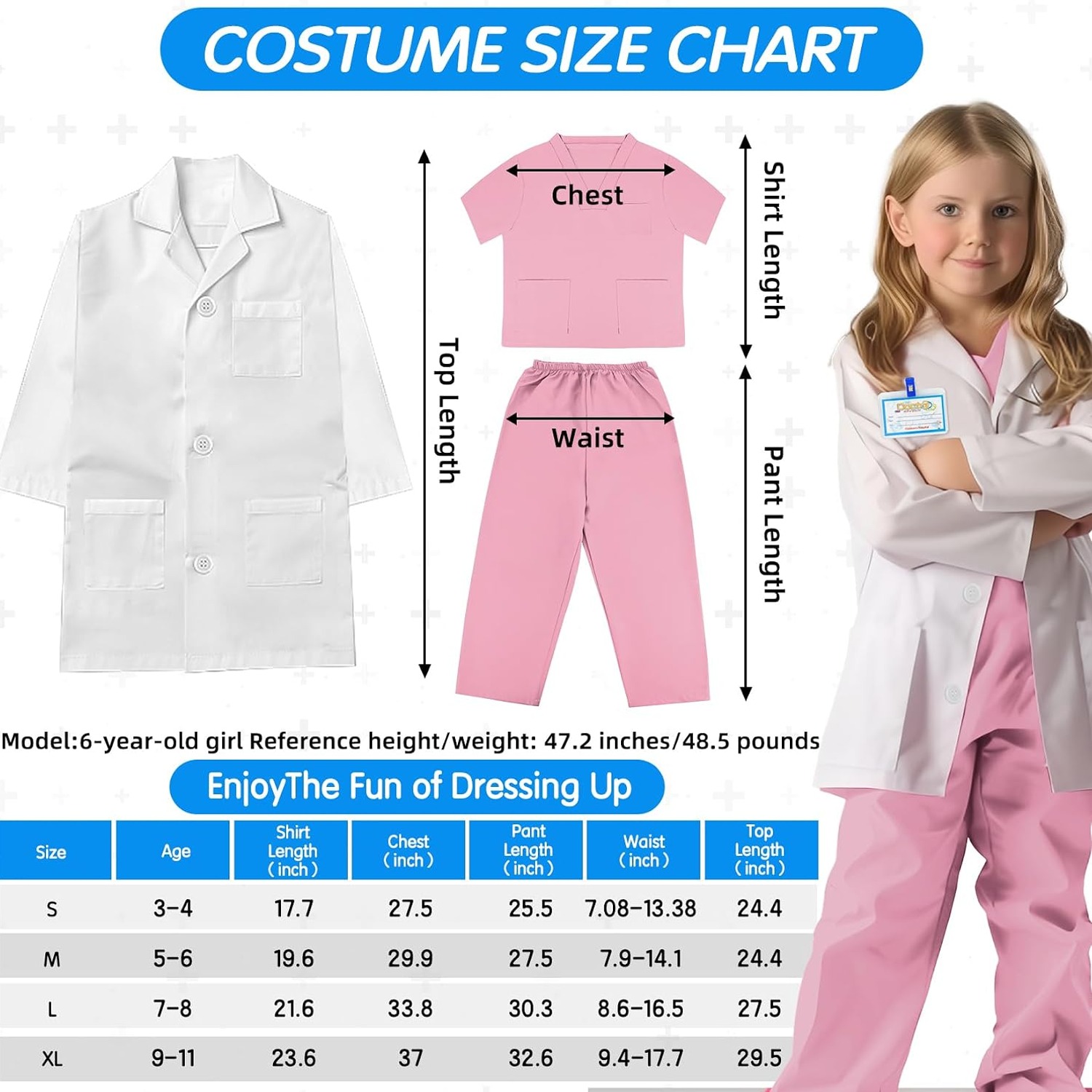
The product is named for ages 5-6, and the supplied size chart identifies that option as size 130. An age range is helpful for narrowing a search, but it does not tell you how a garment will fit an individual child.
For this size, the listed coat length is 27.6 inches. The shirt length is 20.5 inches, the bust is 30.7 inches and the trouser length is 27.9 inches. These are the figures to use when comparing the costume with clothing at home.
Choose a shirt and trousers that fit the child now, lay them flat and compare the relevant lengths. The maker does not explain exactly how its bust figure was measured, so do not assume it means a flat width. Ask for clarification if that measurement will decide your purchase.
Also think about what the child may wear underneath. A school event in a warm room and an outdoor Halloween walk may call for different layers. The maker's description does not state how much extra room the costume has, so avoid assuming that the age label allows for bulky clothing.
Understand the fabric information
The detailed product description lists a blend of 95% polyester and 5% spandex. That gives you a stated fabric composition, but not a full picture of how each piece feels or fits.
The maker does not provide fabric weight, stretch measurements or a lining description. It also does not give the materials used for the stethoscope prop and name badge. If your child has particular fabric preferences, those missing details may be worth checking before ordering.
Do not treat a fabric percentage as a promise of a certain fit. Garment shape and size matter too. Comparing the listed measurements with familiar clothing is more useful than guessing how much the fabric might stretch.
Exact colours for all the pieces are not given by the maker in the structured details. The reference text describes a white coat and notes that colours may look different on a screen. If a school or performance needs a precise colour match, confirm that detail first.
Choosing an outfit for career day
A career day doctor costume gives a child a clear role to talk about. The scrubs, coat and name badge can be part of that conversation, whether the class is sharing job ideas or acting out short scenes.
Check the school's instructions before sending every accessory. Some activities may call for clothing only, while others may welcome props. A quick question to the teacher can save a child from having to leave part of the outfit in their bag.
Think about the normal school day as well. Ask how changing for the activity will work and where spare pieces can be kept. A seven-piece set has more parts to keep track of than a single costume garment.
For a performance, share the pack contents with the organiser. The included stethoscope is a prop, so it fits a pretend scene rather than a demonstration of medical equipment.
Making room for pretend clinic play
At home, a doctor dress up set can be used in a simple story. A child might welcome a teddy bear, ask how it feels and make a pretend note before sending it home to rest. The costume gives the story a visible role, while the child chooses what happens next.
You do not need a large collection of extra toys. A seat for the patient and a place for the doctor to sit may be enough. Keep any added items appropriate for the child's age and follow their own use instructions.
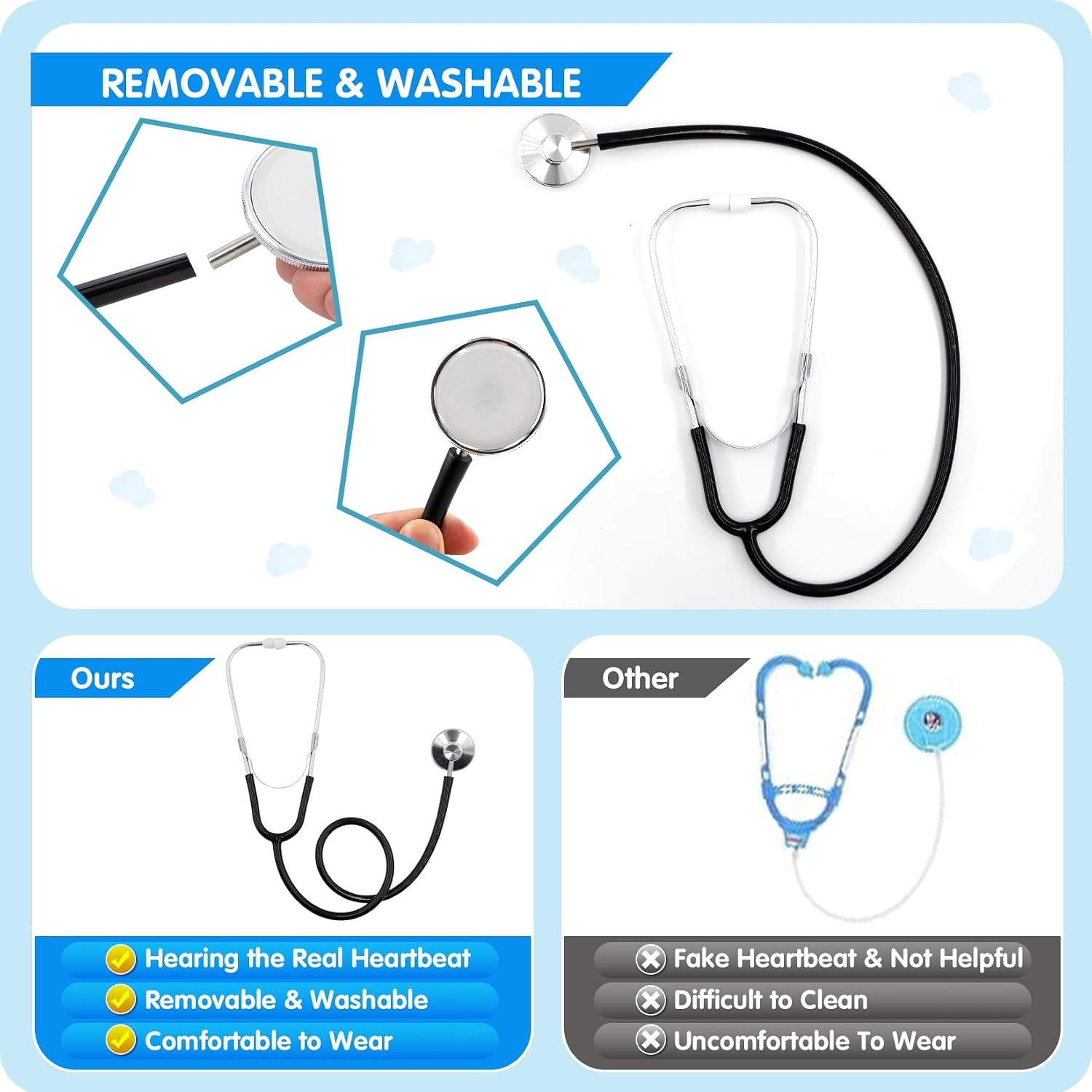
It helps to make the boundary between play and real care clear. The stethoscope is described as a prop, and the mask has no stated protective rating. Neither should be relied on for medical use.
Follow the child's interest rather than setting a fixed script. Some children will enjoy a pretend appointment, while others may want to run the reception desk or give a soft toy a name badge. The outfit can be part of the game without deciding every detail.
Parties, Halloween and other occasions
The supplied description lists costume parties, themed birthdays, Halloween and stage performances among the possible uses. This makes the set an option to consider when a child wants a doctor role rather than a character costume.
For a hospital theme party outfit, first check whether the host has requested particular clothing or props. For a stage event, ask whether every piece needs to be worn. The full pack may be useful, but an organiser may have a simpler plan.
An outdoor event needs a separate weather check. No warmth or weather protection is stated for this costume. Plan suitable clothing for the conditions and make sure any extra layers are considered when checking fit.
The lab coat also offers another dress-up idea. It can be used as a scientist dress up coat in a pretend story. That does not make it protective laboratory clothing, and it should not be treated as such.
Buying it as a gift
A doctor costume gift may suit a child who already enjoys dressing up or talking about medical jobs. Interest is a better guide than age alone. A child who likes the idea of a pretend clinic may have a clear use for the included props.
Before buying, ask a caregiver to check the size 130 measurements. You do not need to spoil the surprise to confirm whether the shirt and trouser lengths are likely to work.
Timing matters too. If the gift is for a birthday or a school event, leave time to resolve questions about the order.
Keep the packaging and return conditions in mind when giving it. The stated return window runs from delivery, not from the date the gift is opened.
Care and keeping the pieces together
The maker does not give a wash temperature, machine cycle or drying setting. Read the garment care label before cleaning. Fabric composition alone is not enough to choose the right method.
Separate the stethoscope prop and name badge from the clothing before washing anything. Follow any cleaning directions included with those items rather than putting the whole set through the same process.
After cleaning, let all pieces dry before storing them. Keeping the outfit and accessories together can make the next dress-up session easier to prepare. It also gives you a chance to check that the cap or badge has not been left elsewhere.
If you are considering a return, do not wash or wear the outfit. Returns require it to be unworn, unwashed and in its original packaging.
The short version
This seven-piece kids scrubs outfit includes the main clothing and props for a pretend doctor role. It is the age 9-10 option, listed as size 130, with garment measurements supplied to help you choose.
Check those measurements, confirm delivery timing and read the care label when it arrives. If it is not right, the stated return period is 14 days from delivery, with customer-paid return postage and the original condition requirements. Faulty or wrongly described goods are addressed under the consumer protection law of the buyer's province or territory.